

Brain mapping
Your Brain's Unique Fingerprint, Made Visible.
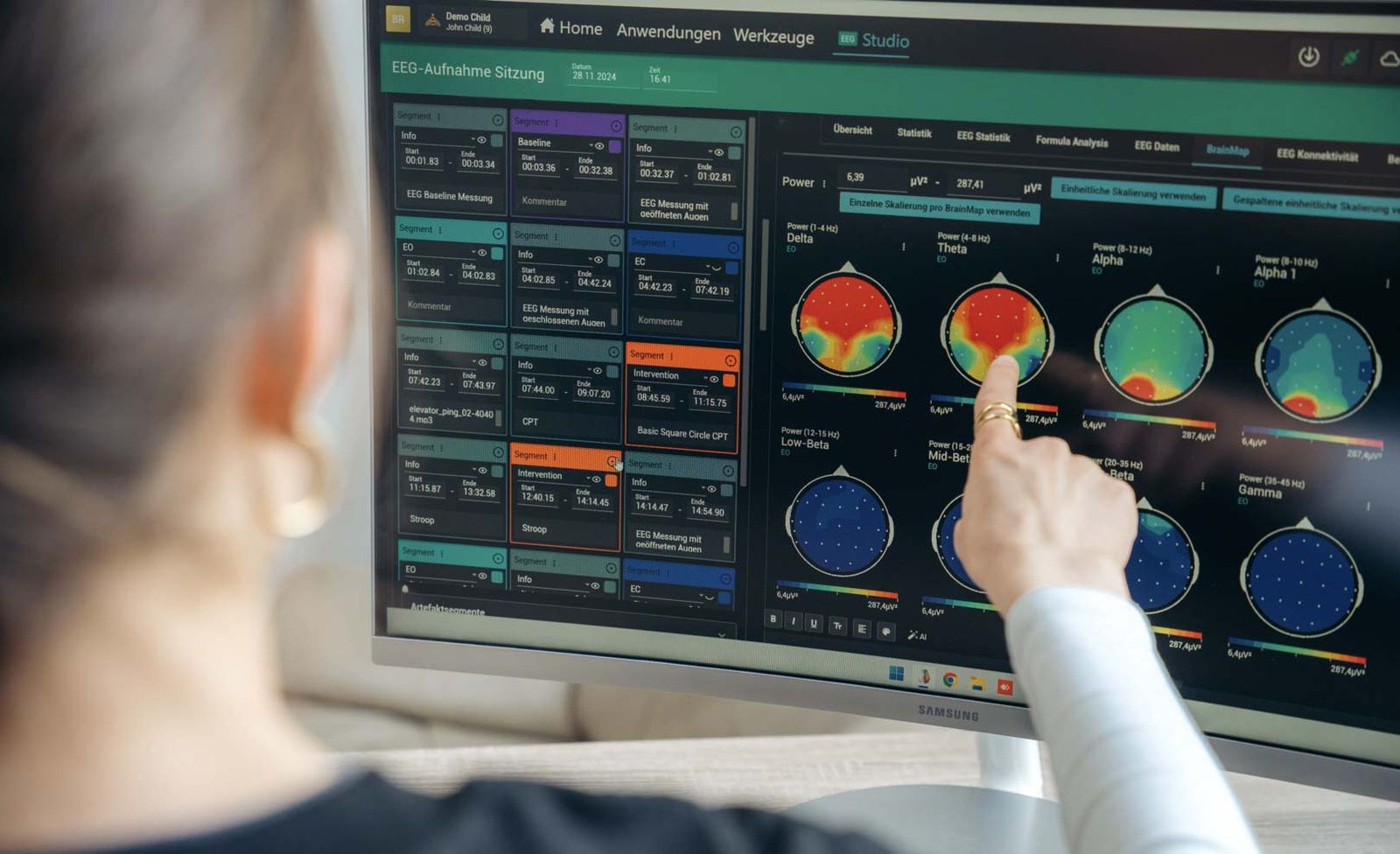
A comprehensive QEEG brain map analysis measures the electrical activity across your brain and turns it into a clear, visual picture — analysed by a specialist team, compared against normative data, and explained to you in detail.
What a Brain Map Reveals
Patterns in frequency, amplitude, symmetry and connectivity — and how they relate to the way you feel and function.
Focus & Attention
Irregular patterns linked to ADHD-type traits, concentration difficulties, distractibility and trouble staying on task.
Anxiety & Stress Response
Overactive high-beta activity that can drive racing thoughts, hypervigilance, chronic tension and a nervous system stuck in overdrive.
Low Mood & Depression
Imbalances between hemispheres and slow-wave patterns associated with persistent low mood and loss of motivation.
Sleep Disruption
Patterns behind broken sleep, difficulty switching off and waking unrefreshed — the rhythms that should carry you into rest.
Brain Fog & Cognitive Fatigue
Excess slow-wave activity while awake — the measurable signature behind fog, slowed processing and mental exhaustion.
Neurological & Age-Related
Early signals connected to cognitive ageing, concussion recovery and neurological concerns — caught while there's most room to act.
What the Session
Actually Feels Like
01
You sit. That's most of it.comfortable chair, quiet room
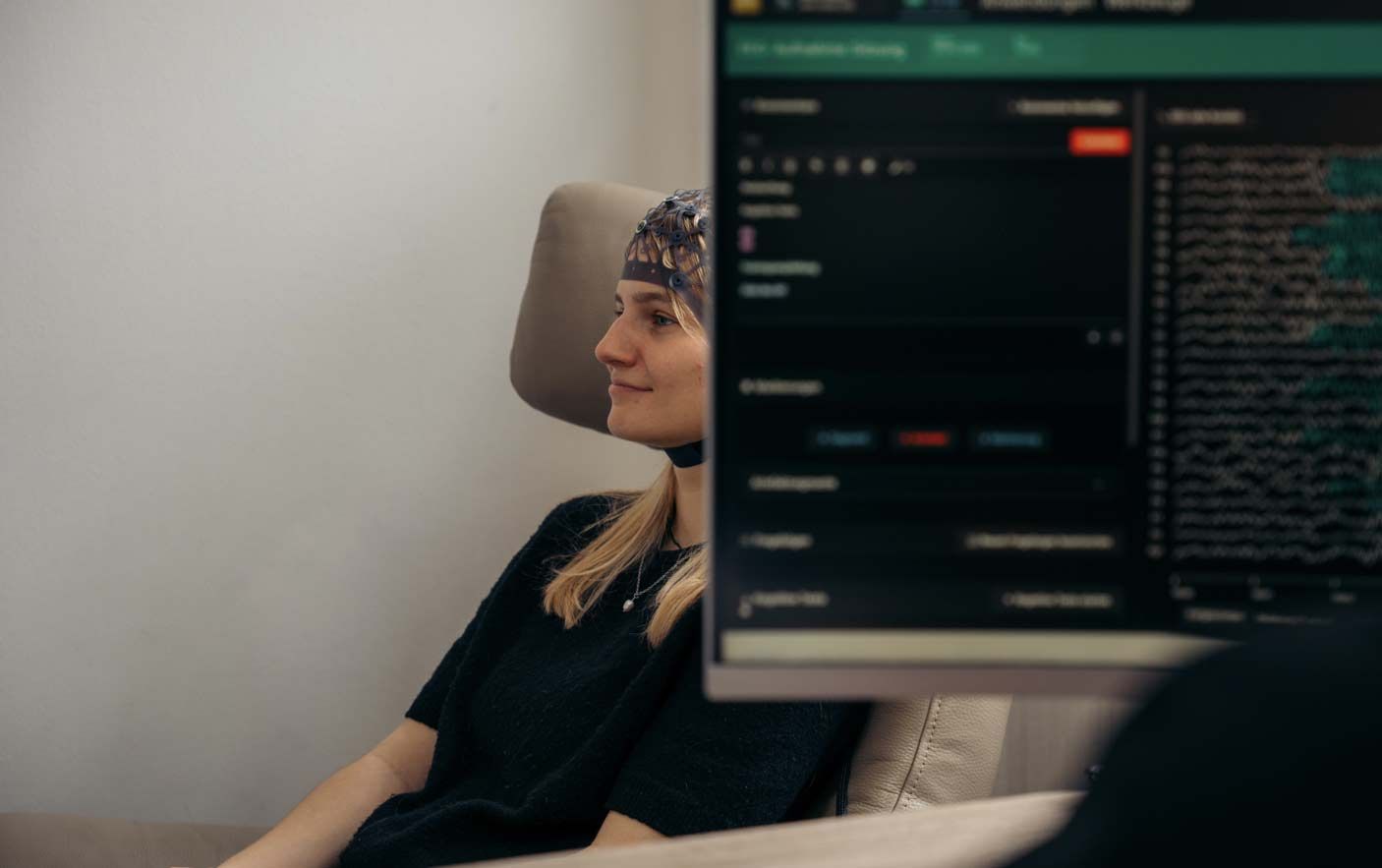
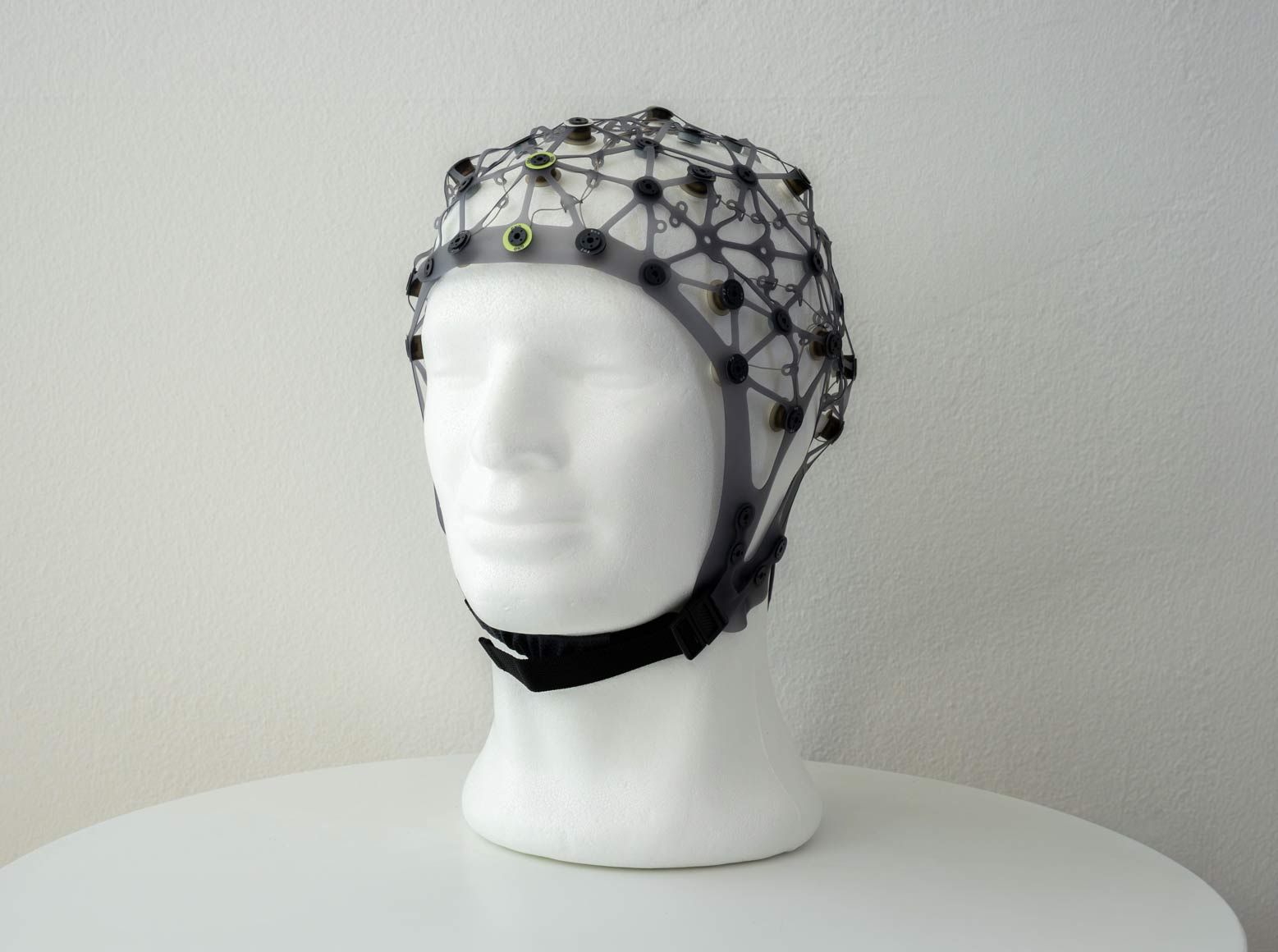
A trained technician fits the sensor cap and checks each contact. You'll sit comfortably — eyes open for part of the recording, eyes closed for the rest.
02
The cap listens.it reads — nothing goes in
The sensors only record the electrical activity your brain already produces. Nothing is introduced into the body — no radiation, no sedation, no side effects. Many people find the hour genuinely relaxing.
03
The data becomes a map.Six brainwave bands across the cortex
Your recording is processed and compared against normative databases, then reviewed by our specialist team — patterns, ratios, symmetry and connectivity, site by site.
04
You see it explained.45–60 minute review, in detail
A specialist walks you through the map — what's overactive, what's underperforming, and how it connects to what brought you here. Then, if you want it, a plan.
Who Brain
Mapping Is For
Different starting points — the same need
for an honest look at what's going on.
The Professional Running on Empty
Focus and resilience aren't what they were, and coffee stopped being the answer a while ago. The map shows what's actually driving the drop.
The Parent Who Wants Answers
When a child or teenager's struggles are hard to explain, objective data can cut through years of guesswork — gently, and without discomfort.
The Person With a Family History
Dementia or cognitive decline in the family changes how you think about your own brain. A baseline map is the proactive first step.
Living With Stress, Anxiety or Low Mood
When stress, anxiety or low mood has become the everyday, an analysis shows what is happening underneath it — and what to target.
The Person Recovering
After concussion, illness or burnout, the map shows how recovery is really progressing — and what still needs support.

When Mapping Isn't
the First Step
Brain mapping isn't for everyone, and we'll tell you when it isn't. Acute medical symptoms belong with your GP or A&E first. If the free consultation suggests a better route, we'll point you to it — that honesty is the whole point of the consultation.
Ready to see your brain's fingerprint?
Appointments within days at 10 Harley Street — starting with a free 20-minute Zoom consultation.
Take the 2-Minute Brain Quiz