

How it works
From Brain Map to Personalised Plan.
The brain map is the starting point. Everything that follows — your treatment, your plan, your progress — is built around what it shows. Here's exactly what happens, in order.
01
Free Assessment Call15 minutes · phone or Zoom
A relaxed conversation with a member of the clinical team about what's been going on — the symptoms, the history, what you've already tried. We'll tell you honestly whether brain mapping is a good fit. If it isn't, we'll say so and point you somewhere better suited.
02
In-Clinic Brain Mapping45–60 minutes · 10 Harley Street
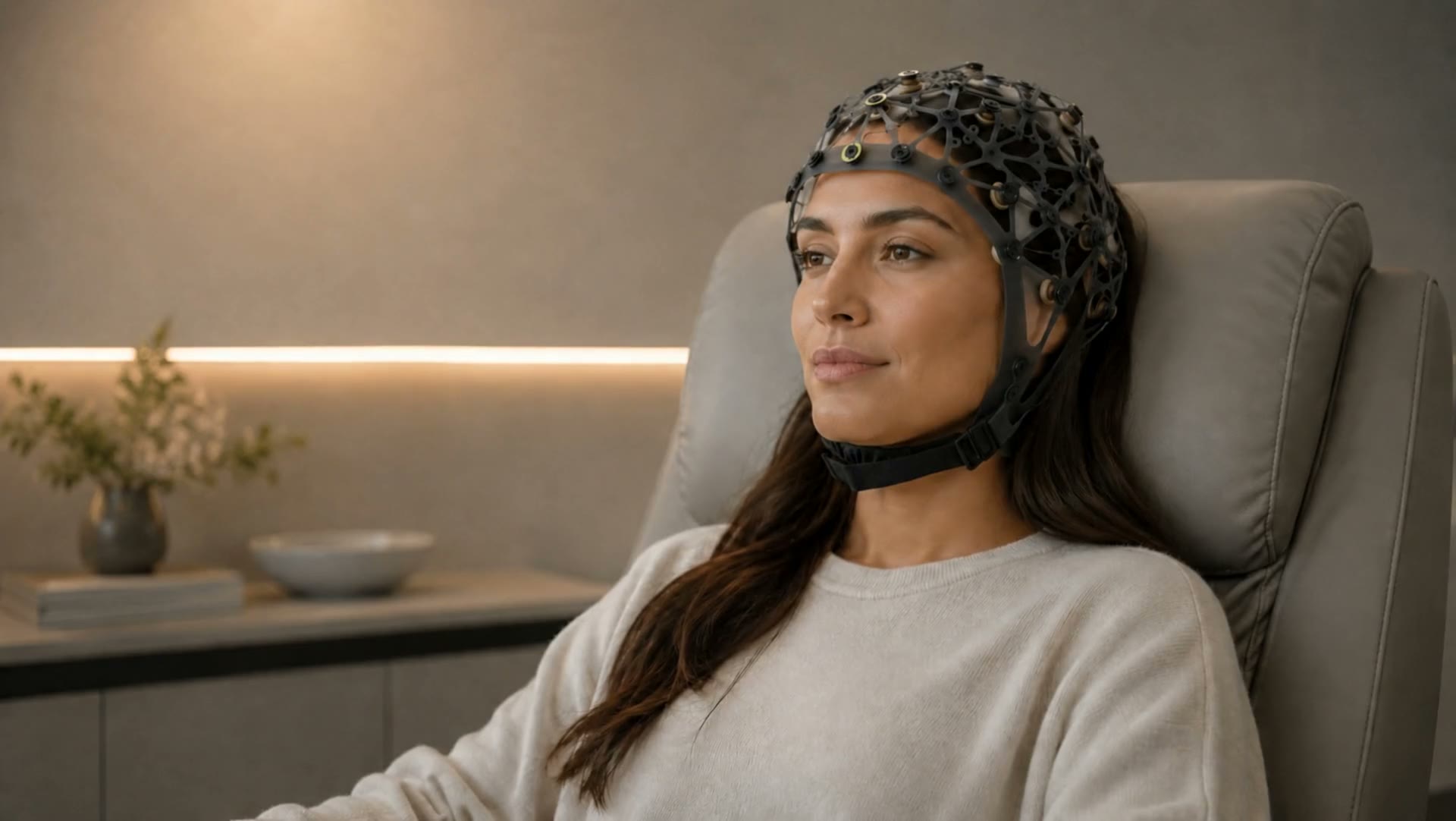
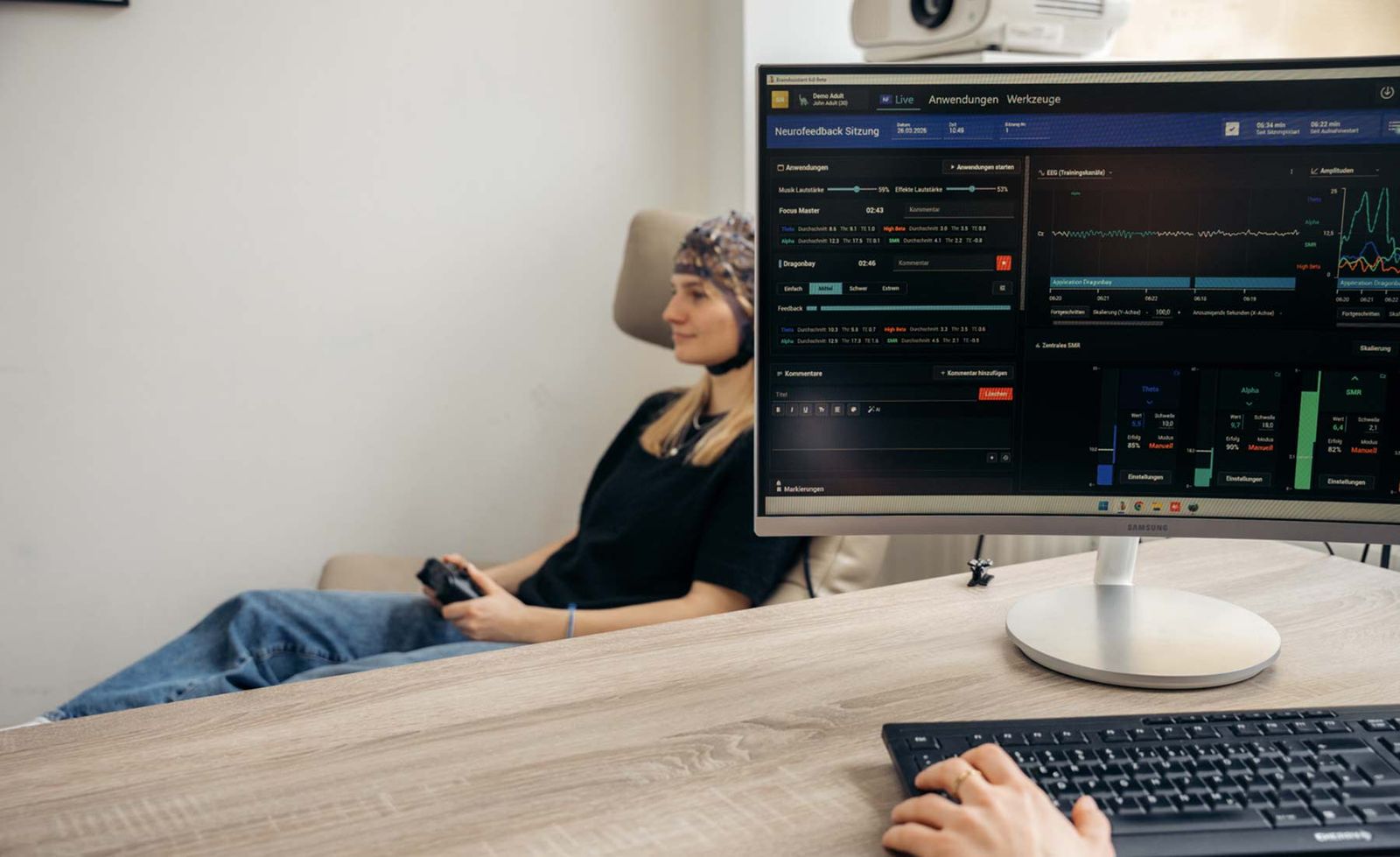
You'll sit comfortably while a gel-free sensor cap records the electrical activity across your brain. Nothing is introduced into the body, nothing hurts, and most people find it surprisingly relaxing. That's it — the data does the rest.
03
Analysis & Results Review45–60 minutes · in person or remote
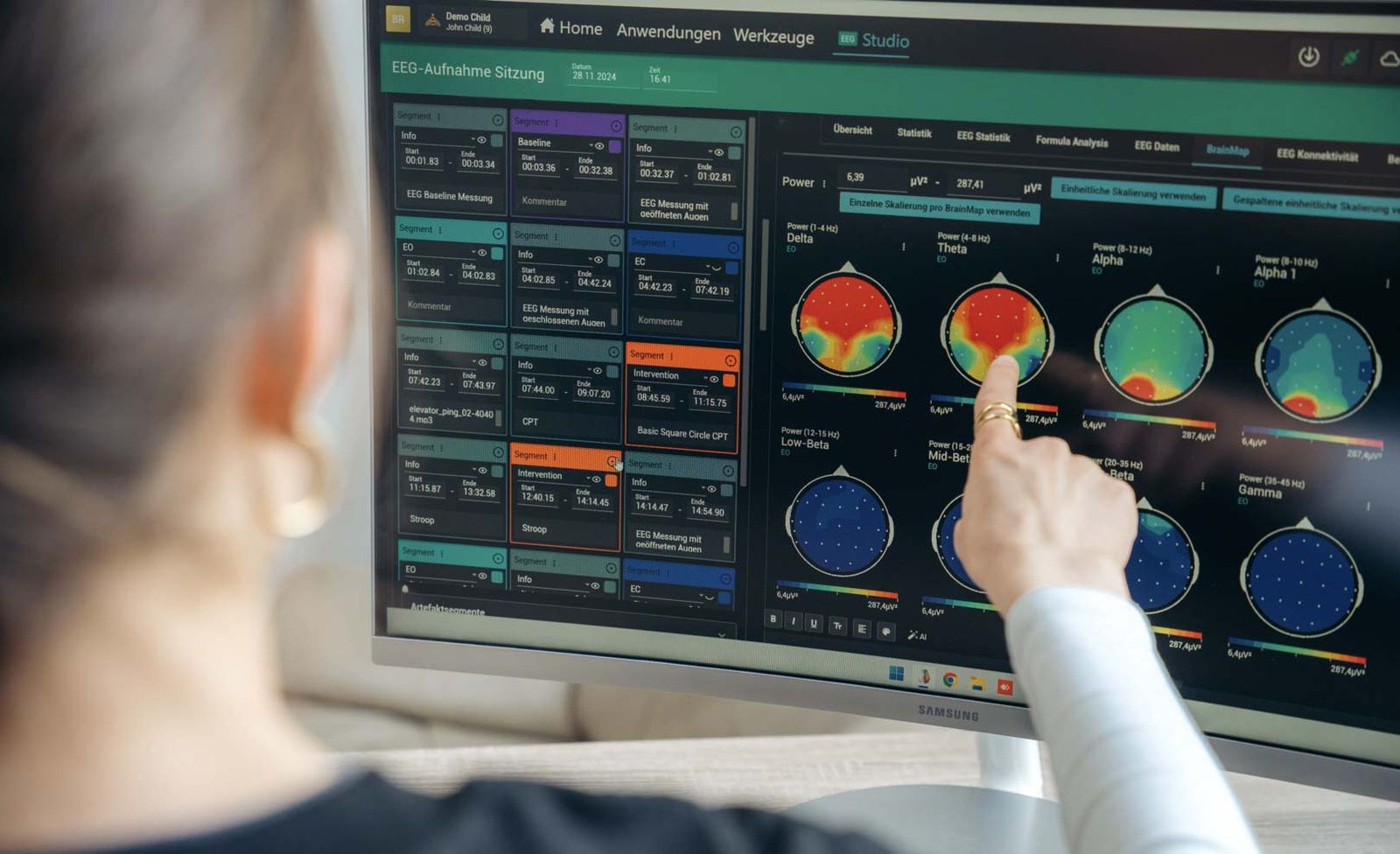
Our specialist team analyses your map against normative databases — frequency, amplitude, symmetry and connectivity. Then a specialist explains it in detail: where your brain is overactive, where it's underperforming, and how that connects to how you feel.
04
Your Personalised Planbuilt around your map
A plan built on findings, not guesswork. It may combine photobiomodulation (light) therapy, targeted psychotherapy, nutritional and lifestyle guidance, or a specialist referral. The plan is yours — what you pursue, and at what pace, is entirely your decision.
Your Plan May Include
Any combination — chosen for your patterns, never off the shelf.
Transcranial Photobiomodulation (tPBM)
Targeted near-infrared light that supports cellular energy and healthy brain function — including an at-home helmet for aftercare between sessions.
Targeted Psychotherapy
Talking therapy focused by your map — EMDR, CBT and clinical hypnotherapy delivered by senior practitioners, aimed where the data points.
Nutrition & Lifestyle
Guidance from our consultant nutritionist on the habits, fuel and routines that support the changes your plan is working towards.
Specialist Referral
Where your map suggests something beyond our remit, we refer you promptly to the right specialist — with your data and our findings in hand.
Transcranial photobiomodulation · tPBM
Light, Directed
at the Brain.
Transcranial photobiomodulation delivers near-infrared light to the brain through a helmet worn at home. It is non-invasive and silent, and a session takes around twenty minutes.
Light at specific near-infrared wavelengths passes through the scalp and is absorbed by cells, where it is understood to support the mitochondria — the structures that produce cellular energy. It is an area of active research, and the one that shaped this clinic: it is Raymond Francis’s particular interest, and the reason tPBM sits alongside brain mapping here rather than being offered as an add-on.
- Recommended only where your brain map suggests it may help
- A protocol designed around your own results — which regions, how often, and for how long
- Used at home on your own schedule; the helmet is yours to keep
- Progress checked against your map at re-mapping, not assumed
Watch: which wavelengths actually reach the brain — from Neuronic, who make the helmet.
Follow-Up &
Progress Tracking
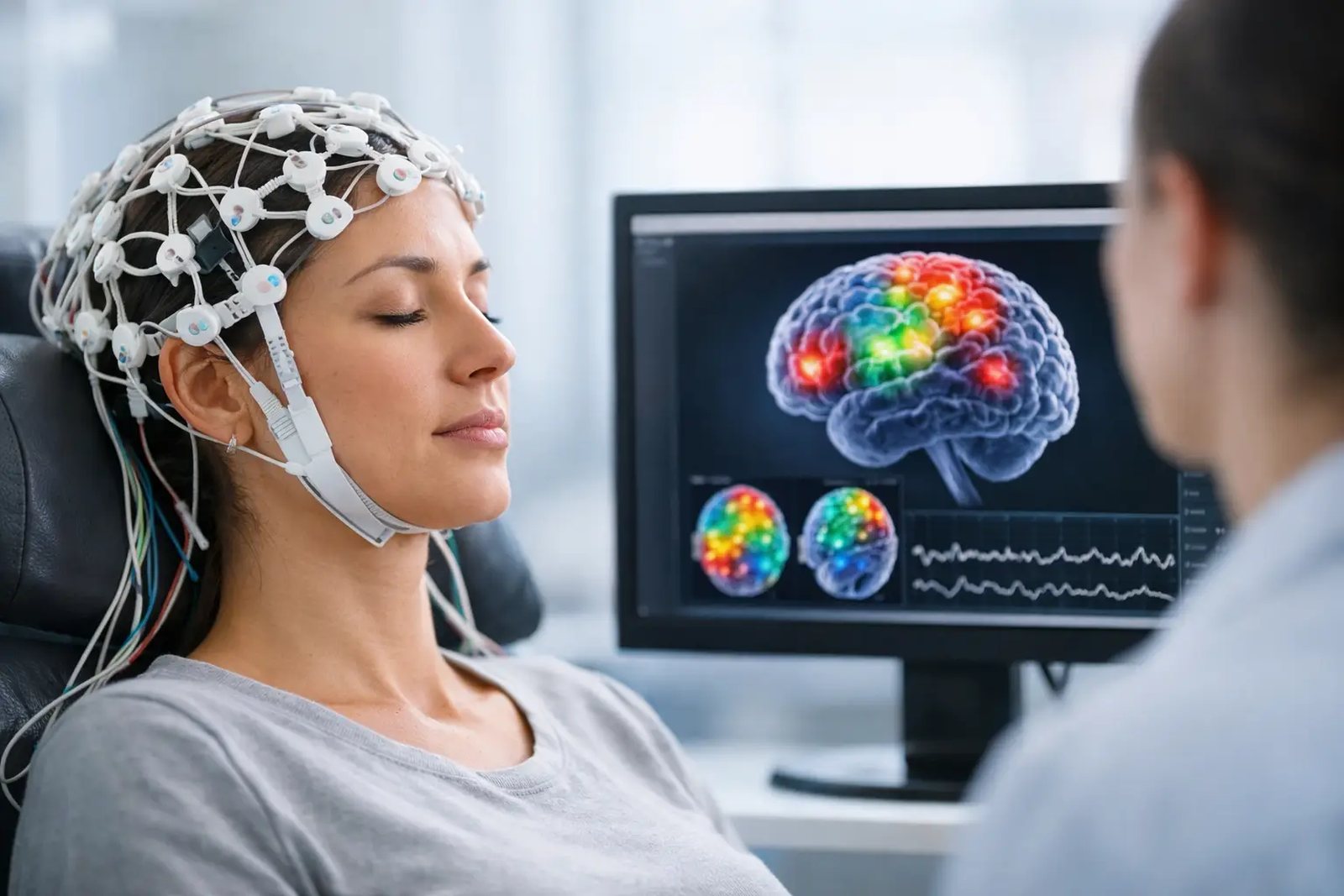
Your brain changes — your plan should too. Re-mapping at agreed milestones shows progress on screen, not just in how you feel, and keeps every next step honest.
Trusted by clients of all ages throughout the UK
“After years of stress affecting my sleep and focus, Brain Wellness helped me regain balance. The personalised therapy and red light treatment have completely transformed my mental well-being.”
“I struggled with brain fog and constant mental exhaustion. The Brain Wellness program gave me clarity, energy, and a structured plan to keep my cognitive health on track. Highly recommended!”
“With a family history of dementia, I wanted to take proactive steps. The brain mapping and therapy have reassured me I’m doing everything possible to protect my future brain health.”
The first step takes twenty minutes.
A free consultation with a specialist — and an honest answer about whether brain mapping can help.
Take the 2-Minute Brain Quiz